Kanjivaram Pure Soft Silk Saree: A Practical Style Guide
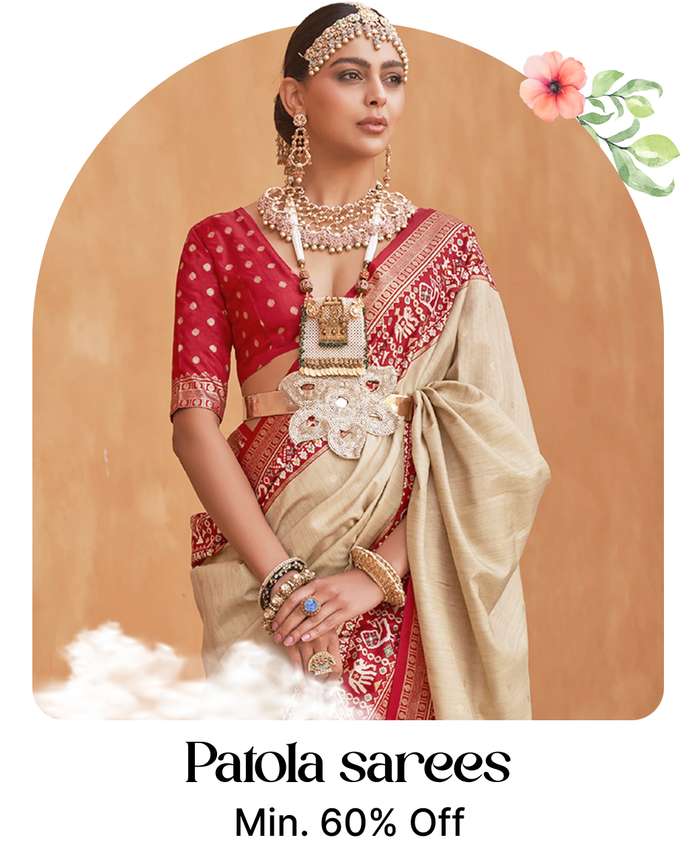
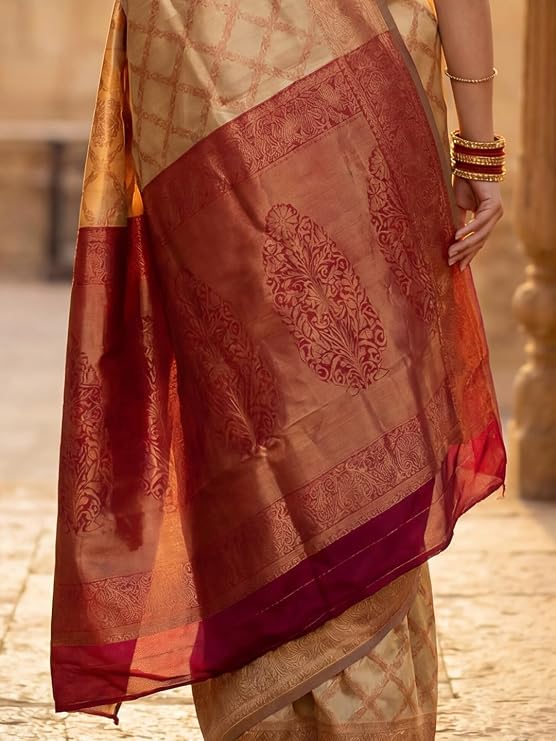
Traditional silk sarees continue to hold a special place in wedding and festive wardrobes because they combine a structured drape with rich colour, woven detail and an unmistakably ethnic appearance. This cream and maroon saree is presented with a Kanjivaram-inspired woven design, decorative zari detailing and a matching unstitched blouse fabric section.
The cream body creates a lighter visual base, while the maroon elements add contrast and make the saree suitable for styling with traditional jewellery, festive footwear and coordinated accessories. As this is an unstitched saree, the final appearance depends on blouse tailoring, draping technique, accessories and the exact product specifications supplied by the retailer.
✔ Cream and Maroon Palette: A contrasting colour combination that works well with gold-toned and traditional accessories.
✔ Woven Decorative Details: Floral and zari-style detailing adds visual texture to the saree.
✔ Unstitched Blouse Fabric: The supplied blouse section can be tailored according to your preferred neckline and sleeve design.
✔ Versatile Occasion Styling: Suitable for weddings, festivals, family celebrations and other dressy occasions depending on the styling.
✔ Classic Saree Format: The unstitched construction allows you to create your preferred pleat and pallu arrangement.
Why a Kanjivaram-Inspired Silk Saree Still Works for Modern Celebrations
A traditional silk saree does not need complicated styling to make an impact. Its strongest features are often the combination of fabric appearance, woven pattern, border design, colour contrast and the way the saree is draped.
Cream and maroon create a particularly adaptable palette. The lighter body keeps the overall appearance refined, while the deeper maroon elements provide enough contrast for jewellery and accessories to stand out.
The important point when shopping online is to separate the visual impression from the exact product specification. Photographs can show colour, pattern and overall styling, but details such as fibre composition, saree length, blouse-piece measurements, care instructions and included components should always be confirmed on the current product listing.

Understanding the Saree Before You Buy
When purchasing a traditional saree online, the most useful approach is to examine the garment from several angles rather than relying on a single product photograph.
Look at the body pattern first. Floral woven details can create a softer appearance, while larger motifs or stronger borders can make the outfit feel more formal. Next, consider the relationship between the body, border and pallu. These three elements determine much of the visual balance once the saree is draped.
The blouse fabric is another important consideration. An unstitched blouse gives you freedom to choose the neckline, sleeve length and overall cut, but it also means that tailoring is required before the complete outfit is ready to wear.
Finally, check the retailer's current product information for material composition, measurements, care instructions, package contents, seller information and return conditions.
Styling the Cream and Maroon Colour Combination
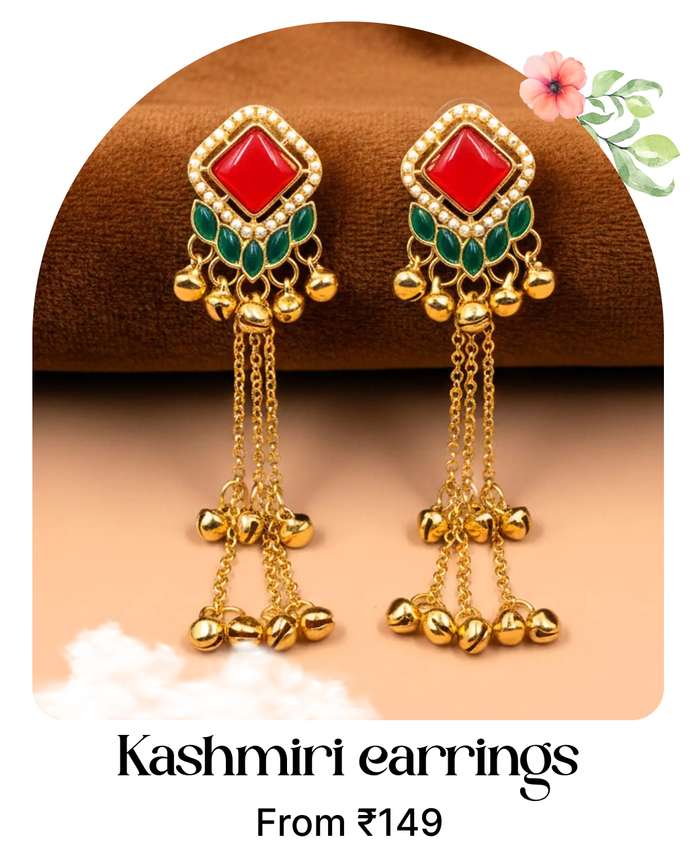
Cream and maroon can be styled in several directions depending on the occasion. For a traditional wedding look, gold-toned jewellery can reinforce the warm character of the palette. For a more restrained appearance, smaller earrings and a simple bracelet can keep the outfit elegant without competing with the woven details.
Maroon also gives you room to coordinate the blouse and accessories without requiring everything to match exactly. A blouse tailored from the supplied fabric can repeat the darker colour, while footwear and a handbag can introduce neutral or metallic tones.
If the saree already contains prominent zari or decorative work, avoid adding too many competing statement pieces. Let one or two accessories provide the strongest visual accent.
Where Can You Wear This Saree?
A traditional silk saree is naturally suited to occasions where ethnic dressing is expected, but the final level of formality depends on how you style it.

How to Tailor the Blouse for a More Personal Look
An unstitched blouse piece gives you an opportunity to personalise the final outfit. The best design depends on the occasion, your comfort preference and the amount of detail already present in the saree.
A classic elbow-length sleeve can create a traditional appearance, while a simple short-sleeve blouse can make the outfit feel lighter and more contemporary. A higher neckline can provide a more covered look, whereas a carefully proportioned open neckline can make the overall outfit feel more relaxed.
If the saree has strong decorative borders, repeating a small portion of that visual language in the blouse can help create a coordinated outfit. However, the blouse does not need to duplicate every saree detail.
Tailoring tip: Take the saree and blouse fabric to your tailor together. This makes it easier to coordinate the blouse colour, border placement, sleeve length and neckline with the final drape.
For additional ethnic styling inspiration, you can explore this ethnic accessory guide and compare accessories that complement traditional saree styling.
Simple Draping Considerations for a Polished Saree Look
Because this is an unstitched saree, the draping method plays a major role in the finished appearance. Before the event, try the complete outfit with the chosen blouse and footwear so you can determine the most comfortable saree length and pleat arrangement.
● Prepare the blouse first: Make sure the blouse fits comfortably before finalising the saree drape.
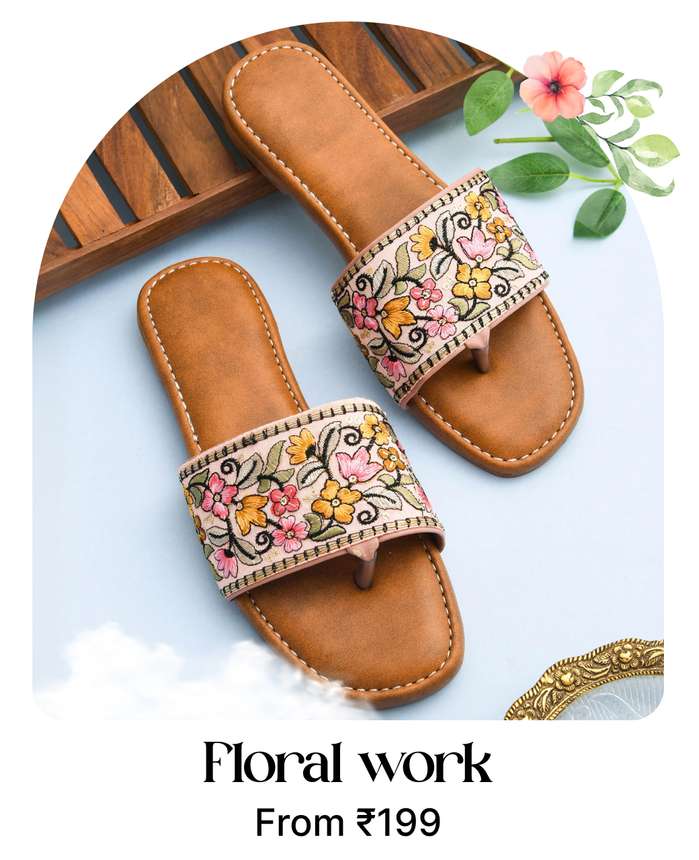
● Choose footwear early: The heel height affects the final saree length and how the pleats sit near the floor.
● Keep pleats even: Consistent front pleats generally create a cleaner and more balanced appearance.
● Secure the pallu: Pins can be useful when you want the pallu to remain in position during a long event.
● Do a movement test: Walk, sit and climb a few steps before leaving for the event to make sure the drape feels secure.
What to Check About Size and Measurements
Sarees are different from fitted garments because the main fabric is generally unstitched. However, the blouse component and the final tailoring still determine much of the comfort of the complete outfit.
Silk, Soft Silk and Woven Saree Terminology: What to Verify
Traditional saree names can sometimes describe a style, design influence or weaving tradition rather than a single universal fabric specification. That is why buyers should look beyond words such as “silk”, “Kanjivaram” or “Banarasi” in a product title.
Check the exact material composition listed for the individual product. If the retailer specifies a silk blend, synthetic fibre or another composition, use that information when deciding whether the saree meets your expectations.
Woven motifs, printed patterns and zari-style details can also create different appearances. Product photographs can help you understand the visual design, while the written specifications provide the more useful information for purchase decisions.
This distinction is particularly important when comparing several sarees that appear similar in photographs but have different materials, construction methods or care requirements.
How to Care for a Decorative Silk Saree
The safest care method depends on the exact fabric composition and the manufacturer's instructions. Decorative woven details, zari-style accents and delicate fabrics should not automatically be treated like everyday washable clothing.
● Read the care label: Follow the product-specific instructions supplied with the saree.
● Ask before washing: If the care instructions recommend professional cleaning, do not substitute machine washing.
● Avoid direct chemicals: Perfume and other products should not be sprayed directly onto delicate decorative areas.
● Iron carefully: Use a suitable temperature for the actual fabric and avoid excessive heat around embellishments.
● Store dry: Make sure the saree is completely dry before long-term storage.
● Protect decorative areas: Fold carefully and use a clean breathable storage layer where appropriate.
Who Might Prefer This Style?
This style may appeal to shoppers who enjoy traditional saree dressing but want a colour combination that can be adapted to different levels of formality.
● Wedding guests: A cream and maroon palette can be dressed up with traditional jewellery and festive accessories.
● Festival dressing: Woven patterns and decorative borders can provide enough visual detail without requiring excessive additional styling.
● Family occasions: The same saree can be styled more simply for smaller celebrations.
● Traditional wardrobe collectors: A classic colour combination can complement other ethnic pieces already in the wardrobe.
● Custom-style shoppers: An unstitched blouse section allows more freedom in choosing the final blouse design.
When You May Want a Different Saree Style
A traditional unstitched saree is not automatically the best choice for every event or every shopper. Consider your preparation time, comfort preferences and styling experience before buying.
If you want to get dressed very quickly without arranging pleats, a ready-to-wear saree may be more convenient. If you prefer a very lightweight drape, compare the listed fabric composition and product weight where available rather than assuming that a silk-style design will feel light.
Similarly, if your event has a contemporary dress code, an ethnic dress or modern fusion outfit may provide a better match than a traditional saree.
For alternative occasion styling, compare this saree with our party wear dresses and other contemporary options before deciding.
Advantages & Things to Consider
Potential Advantages
● Traditional-inspired styling works naturally for many festive occasions.
● Cream and maroon provide a versatile contrasting colour combination.
● Woven and decorative details can add visual interest without relying entirely on accessories.
● An unstitched blouse section allows personal tailoring choices.
● The saree can be styled more heavily or more simply depending on the event.
Things to Consider
● The blouse requires tailoring before the complete outfit is ready.
● Unstitched sarees require manual draping.
● Exact fabric composition should be confirmed from the current product listing.
● Decorative fabrics may require more careful maintenance than everyday clothing.
● Online colours can vary because of photography and individual screen settings.
● Product measurements, price, availability and return policies can change.
How to Judge Colour and Detail from Product Photos
Product photographs are useful for understanding the overall design, but they should not be treated as a perfect representation of how the saree will look under every type of lighting.
Look at several images before deciding. Close-up photographs can help reveal woven patterns and border details, while full-length photographs give you a better idea of the relationship between the body, pallu and border.
If you are particularly concerned about the exact shade of cream or maroon, rely on the written colour description as well as the photographs and remember that display settings can affect colour appearance.
5 Easy Ways to Style the Same Saree Differently
You do not need a completely new saree for every celebration. Changing a few styling elements can create noticeably different outfits.
● Classic Wedding: Traditional gold-toned jewellery, a tailored blouse and ethnic footwear.
● Minimal Festive: Smaller earrings, a clean hairstyle and understated footwear.
● Family Celebration: Medium jewellery with a comfortable blouse and compact handbag.
● Contemporary Fusion: Experiment with a modern blouse silhouette while keeping the saree drape traditional.
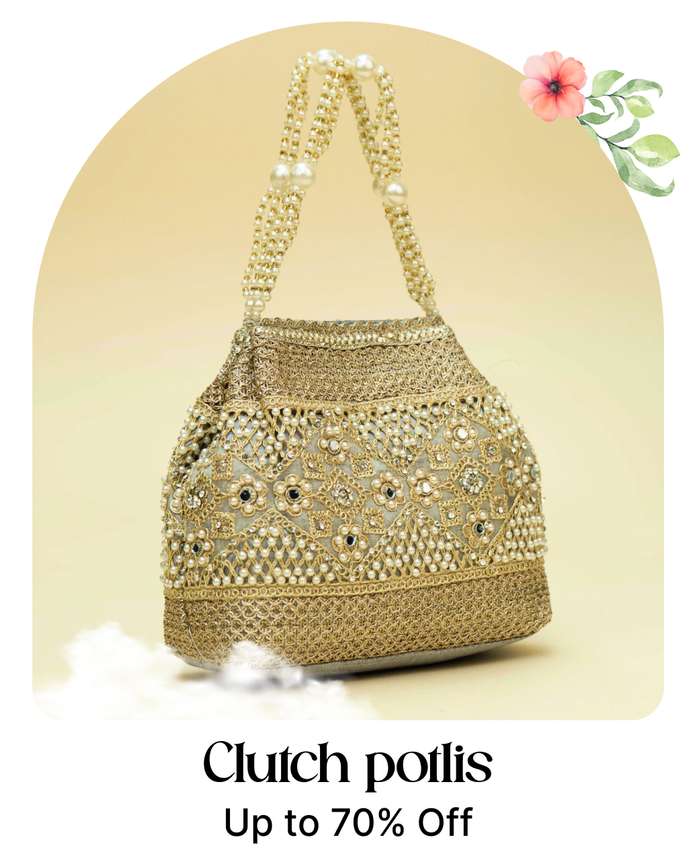
● Evening Event: Use stronger earrings, a refined clutch and carefully selected metallic accents.
Frequently Asked Questions About This Saree
Before buying a traditional silk saree online, it is worth checking the material, measurements, blouse details, care instructions and styling requirements.
Final Verdict: Is This Saree Worth Considering?
This cream and maroon Kanjivaram-inspired soft silk saree is best considered as a traditional occasion piece that gives you room to personalise the final outfit through blouse tailoring, draping and accessories.
Its strongest styling advantage is the colour combination. Cream provides a refined base, while maroon gives the outfit definition. This makes it relatively easy to coordinate with traditional jewellery and festive accessories without creating an overly complicated colour palette.
The main trade-off is preparation. Because the saree is unstitched and the blouse section requires tailoring, it is not the same as purchasing a ready-to-wear outfit. Buyers should also confirm the exact material composition and care requirements before ordering.
If you enjoy traditional saree dressing and want an outfit that can be adjusted for weddings, festivals and family celebrations, this style is worth comparing with similar sarees before making your final choice.
View the current product details to check the latest price, availability, specifications and retailer information.
Affiliate Disclosure: Some links on this page may be affiliate links. If you purchase through a qualifying link, Affimarts may receive a commission at no additional cost to you. Product prices, availability, specifications, seller information and retailer policies may change, so always verify the latest information on the retailer's product page before purchasing.
Product Design Portfolio


Related Saree Styles

Kanjivaram Style Silk Blend Saree, Traditional Ethnic Saree with Blouse Piece

Kanjivaram Saree For Wedding With Gold Zari Woven Border With Unstitched Blouse Piece

Women's Banarasi Saree Pure Kanjivaram Style Silk Saree With Blouse Piece for Wedding