

Let the Fabric Do All the Talking.
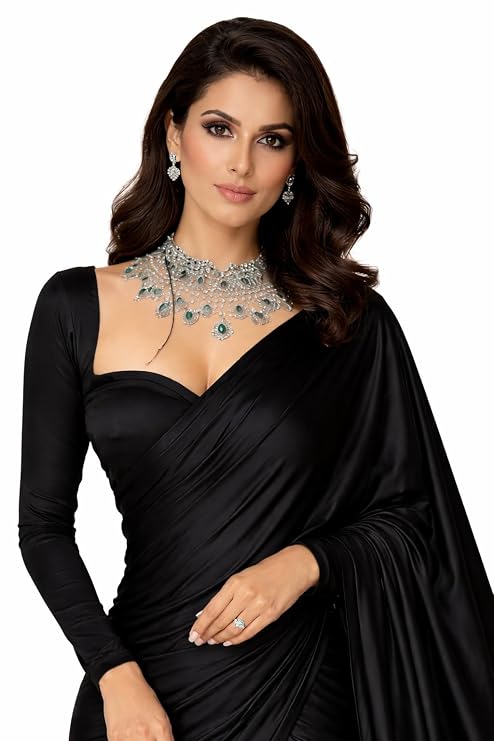
Some sarees ask for attention with embroidery and glitter. This one earns it with finish. Woven from high-grade Japan satin silk, the drape is a single uninterrupted expanse of deep black that takes light in one clean, liquid sweep — no prints to argue with, no embellishment to plan around. The listing pairs the 5.5-metre saree with a matching 0.8-metre unstitched blouse piece, so the final silhouette is entirely yours to tailor.
Solid colour is honest fabric — there is nowhere for the weave to hide. Before you order, confirm the material composition on the live listing, the blouse-piece measurement, the recommended care method (dry cleaning, for this saree) and the seller's current return terms. That five-minute check decides whether this drape earns a permanent place in your wardrobe.
One Colour. Endless Ways to Wear It.
Welcome to a complete guide to dressing well in a solid black satin silk saree. In the pages that follow we look closely at what the Japan satin weave does in evening light, how the 5.5-metre length behaves once it is pleated, what the 0.8-metre unstitched blouse piece makes possible, and how the whole outfit should be planned — from jewellery and footwear to care and storage.
A plain saree is a collaboration between fabric and stylist. Because the surface carries no pattern, every choice you make around it — the blouse cut, the metal of your jewellery, the sheen of your shoes — becomes part of the design. Our goal in this guide is to help you make those choices deliberately, so the saree you wear feels composed rather than simply undecorated.
Solid Black Satin Silk Saree Overview: The 2026 Monochrome Edit
Every few seasons, ethnic fashion swings back toward restraint, and 2026 is one of those seasons. After years of heavily worked surfaces, the quiet authority of a plain drape is being rediscovered — and nothing embodies that shift more cleanly than a solid black saree cut from a smooth, high-sheen satin weave.
The saree examined in this guide is listed as a premium Japan satin silk drape: an ultra-smooth, lustrous fabric with a fluid fall, presented in a single deep black shade. The seller, identified on the listing as BIGIICO, describes a 5.5-metre saree accompanied by a 0.8-metre unstitched blouse piece in matching fabric, with dry cleaning recommended to preserve the finish.
Start with the lighting of your event: satin responds dramatically to evening light, which makes this drape a natural choice for receptions and dinners rather than bright daytime functions.
Read the fabric name carefully: “Japan satin silk” describes a weave and finish. Always verify the exact fibre composition on the individual product listing rather than assuming it from the title.
Plan the blouse from day one: with an unstitched 0.8-metre piece, the neckline, sleeve and back design you choose becomes the only decorative decision of the entire outfit.
Style with restraint: solid black rewards one strong accessory over five competing ones. Decide early what the focal point of your look will be.
Respect the care label: a high-sheen satin face shows mishandling quickly, so the recommended dry cleaning route is worth following rather than improvising at home.
Check every product detail: measurements, colour description, package contents, seller information and return conditions can all change between visits. Review the live listing before the order is placed.
Our buying tip: do not judge a plain saree by its photograph alone. With no print to distract the eye, the true quality lives in the drape, the weight and the finishing — details best confirmed through the seller's current specifications and, where possible, a careful read of buyer questions on the product page.
The Features That Decide How This Saree Actually Wears
Online saree shopping becomes far easier when you know which details deserve scrutiny. With a solid satin drape, four things matter above everything else: the weave, the fall, the length, and the blouse piece.
The weave is the personality of the garment. A satin construction places the float yarns on the face of the cloth, which is what produces that glass-smooth, light-catching surface the listing describes as a liquid drape. The same construction is also the reason the fabric glides over the body without adding bulk, allowing pleats to sit in crisp, parallel lines.
Length is the second practical factor. At 5.5 metres, this saree leaves generous room for structured pleating at the front while still letting the pallu fall freely — an advantage over shorter runs that force you to ration fabric between pleats and drape.
The blouse piece completes the system. Because the enclosed 0.8 metres is cut from the same satin silk as the body, the shoulder line and the pallu remain visually continuous, and the unstitched format hands the tailoring decisions to you and your tailor rather than to a factory size chart.
Finally, consider versatility. A plain black drape pairs with diamonds, pearls, silver, gold or colourful stones with equal ease, which means one saree can serve a wedding reception in December and a family dinner in March without ever looking repetitive.
The Case for a Single, Uninterrupted Colour
There is a reason little black dressing has survived every fashion cycle: a plain dark surface acts as a frame, and everything placed inside the frame gains importance. This saree applies that logic to ethnic dressing. With no border competing for attention and no motif pulling the eye, the wearer's posture, jewellery and tailoring become the design.
The deep black also behaves differently under different light, and that is precisely its charm. In daylight it reads as severe and graphic; under warm evening lighting, the satin face softens into a subtle, moving gleam that photographs beautifully.
Accessories have unusually free rein here. Diamonds and silver-toned pieces feel modern against black; pearls soften it; traditional gold creates the classic contrast used at weddings for generations. The Women's Premium Japan Satin Silk Saree is, in that sense, less a single outfit than a wardrobe platform — the same drape restyled many ways across many seasons.
One caution belongs in the same breath: because the surface is uninterrupted, small things show. A pulled thread or a press-mark will be visible from across the room, which is why the care advice later in this guide deserves genuine attention rather than a skim.
How to Read This Saree Before You Buy
When a saree's appeal rests on its finish rather than its ornamentation, the pre-purchase check looks slightly different from the usual routine. Instead of studying motifs, you are studying behaviour: how the cloth folds, how it reflects, how it weighs on the shoulder.
Start with the product photographs. Slides that show the fabric gathered or pleated reveal more about the real drape than a fully styled model shot does. Look for crisp fold lines and an even sheen — both are good signs for a satin weave.
Next, read the specification block rather than the marketing copy. The details that matter here are the fabric name, the 5.5-metre saree length, the 0.8-metre blouse piece, the care instruction and the package contents. If any of these is missing from the listing, ask the seller before ordering rather than assuming.
Finally, check the return terms. Plain-coloured fabric leaves little room for compromise if the shade or the finish disappoints on arrival, so knowing the exchange route in advance is part of buying well.
Where Does a Solid Black Saree Belong?
A plain black satin drape is more occasion-flexible than its formality suggests, but the styling around it should change with the setting. Choose an occasion below to see how the outfit adapts — the panel updates to match your selection.
Evening Wedding
Regal & UnderstatedA fitted blouse cut from the matching 0.8-metre piece, paired with diamond or silver-toned jewellery. A clean neckline keeps the uninterrupted black drape as the strongest statement of the outfit.
Formal heels or embellished sandals with a compact clutch. Fix your heel height before the final pleating so the hem falls exactly where you want it.
Tailoring the 0.8-Metre Blouse Piece
The enclosed blouse section is where this saree becomes personal. Because the 0.8-metre piece is cut from the same Japan satin silk as the body, whatever design you draft will match the drape exactly — same sheen, same hand, same behaviour under light.
For a traditional wedding look, a high neckline with three-quarter sleeves keeps the ensemble formal and lets the fabric's surface carry the elegance. For a reception or an evening party, contemporary silhouettes work beautifully: a boat neck, a low back, a structured sleeve or a quietly sheer panel, each of which reads as deliberate against a plain drape.
Be realistic about the fabric budget. Satin is a slippery cloth at the cutting table, and 0.8 metres accommodates a standard blouse comfortably but will not stretch to lavish extras. Discuss the pattern with your tailor before any cut is made.
Tailoring tip: take the saree and the blouse piece to your tailor together. Seeing both fabrics side by side makes it far easier to coordinate the neckline, sleeve length and finishing with the way the pallu will actually fall.
Draping Notes for a Clean Silhouette
Because this is an unstitched saree, the drape is entirely in your hands — which is both the pleasure and the responsibility of the format. A few habits make the final look noticeably sharper.
Prepare the blouse first: the complete drape depends on the blouse fitting correctly, so finish and test it before the saree is pleated.
Choose footwear early: heel height changes the hem's final position, so put on the intended shoes before you pin anything.
Keep pleats even: on a plain surface, uneven pleating is immediately visible. Equal, hand-pressed pleats give the front its clean, columnar line.
Let the pallu fall plain: resist over-pinning the pallu. A satin drape moves beautifully, and a light hand keeps that fluid quality intact.
Do a movement test: walk, sit and climb a few steps in the full outfit. Satin's smooth surface shifts more than matte cloth, so confirm the pleats hold before the event.
What to Check About Size and Measurements
Sarees are not fitted garments, but the measurements still decide everything about how the finished outfit behaves. Select a topic below to see what to verify — the panel updates to match your selection.
Saree Length
Fit & DrapeThis saree is listed with a 5.5-metre fabric run plus a 0.8-metre blouse piece. Confirm both measurements on the current product page, since sellers revise listings from time to time.
Length decides how much fabric remains for front pleats and how far the pallu travels. A full 5.5 metres gives generous room for structured pleating without short-changing the drape.
Note whether the blouse piece is measured separately from the saree body, and whether the blouse section arrives attached at the end of the main run.
Lay the saree flat, smooth it end to end, and measure the full length of the body fabric; then measure the blouse section on its own so the two figures are clear.
Sarees are sold unstitched, so the listed length and the blouse-piece measurement decide how much tailoring freedom you actually have. Confirm both figures before the order is placed, and always re-check the live product page because specifications can change.
Satin, Silk and “Japan Satin”: What the Name Tells You
Fabric names in ethnic fashion often describe a finish or a style influence rather than a precise fibre content. “Japan satin silk” points to a satin-weave cloth with a smooth, glossy face and a fluid hand — the qualities the listing emphasises — but the exact fibre blend is a detail for the specification block, not the title.
That distinction matters in practice. Composition determines the weight, the wrinkle behaviour, the sheen's intensity and, most importantly, the care method. Two sarees that look identical in photographs can behave very differently after their first cleaning.
Use both sources of information together. Photographs tell you how the fabric presents; the written specifications tell you how it will live in your wardrobe. When the two agree, you can order with reasonable confidence; when the listing is vague, ask the seller.
For this saree, the listing itself supplies the two facts that matter most day to day: the fabric is a satin silk weave, and the recommended care is professional dry cleaning.
Caring for a High-Sheen Satin Saree
A plain, lustrous surface is the most honest fabric there is: it shows every mark of careless handling. The good news is that correct care for this saree is simple — it just needs to be followed consistently.
Dry clean as recommended: the listing advises professional dry cleaning, which protects the satin face and the deep black shade better than any home method.
Avoid machine agitation: a washing machine's tumbling can permanently crease and dull a satin weave. Do not substitute it for the recommended route.
Keep perfume away from the fabric: spray fragrance on skin or clothing underneath, never directly onto the saree's surface.
Press with care: if pressing is needed, use the lowest effective temperature with a protective cloth, and work on the reverse side where possible.
Store wrapped and dry: keep the saree in a soft cotton wrap inside a cool, dry wardrobe so the finish stays smooth between occasions.
Act quickly after events: have the saree cleaned soon after a celebration rather than storing it with unseen food or drink marks that set over time.
Who Will Get the Most Out of This Saree?
A solid black satin drape suits a particular kind of shopper — one who prefers presence over ornament and is comfortable making a few styling decisions herself.
For Evening Wedding Guests
If the invitation says evening, this saree competes with heavily embellished outfits without raising its voice — the sheen and the colour do the work that embroidery does elsewhere.
For Reception and Dinner Dressers
Formal receptions favour refined, graphic looks. With a well-cut blouse and minimal jewellery, this drape reads as deliberate and modern in exactly the way such settings reward.
For Minimalist Wardrobe Builders
Shoppers who would rather own one excellent versatile piece than five loud ones will get the most from the plain black format: it restyles endlessly and never dates.
For Custom-Tailoring Fans
If you enjoy working with a tailor, the unstitched matching blouse piece is an invitation to design something specific to you rather than accepting a factory standard.
When a Different Saree Might Serve You Better
Honesty is part of good guidance, and a solid black satin saree is not the answer to every invitation or every climate.
For daytime weddings where bright, festive colour is expected, a black drape may feel formal to the point of solemn. In hot, humid afternoon events, the weight and smooth face of satin-style fabric can also feel less airy than cottons or light prints would.
If you love pattern — florals, borders, woven zari work — a plain drape will deliberately deny you that pleasure, and no amount of styling substitutes for it. And if you want a garment that is ready the moment it arrives, remember that this is an unstitched saree: pleating, draping and blouse tailoring are all part of the journey.
Weigh those trade-offs against your calendar and your comfort before deciding. The right saree is the one whose care and character match how you actually dress.
Advantages & Things to Consider Before Buying
Advantages
A smooth, light-catching satin face creates an elegant evening presence without any embellishment.
Solid black pairs freely with diamond, pearl, silver or gold jewellery across many occasions.
A 5.5-metre length leaves generous fabric for crisp, structured front pleats.
The matching 0.8-metre unstitched blouse piece keeps the bodice and pallu visually continuous.
The fluid drape falls close to the body without adding bulk, which flatters most silhouettes.
A finished selvedge and clean lines suit both formal receptions and festive gatherings.
Things to Consider
A plain, glossy surface magnifies press marks and handling, so gentle care is essential.
The blouse piece requires tailoring before the outfit is ready to wear.
As an unstitched saree, it demands traditional draping rather than a ready-to-wear format.
Dry cleaning is the recommended care route, which adds cost and planning compared with washable fabrics.
Exact fabric composition, shade and colour should be confirmed from the current product listing, as screens vary.
Product measurements, price, availability and return policies can change at any time.
How to Judge Colour and Finish from Product Photos
Photographs of dark, glossy fabric are the hardest to judge honestly. Studio lighting is designed to flatter sheen, and screens vary widely in how they render deep black — some pull it toward charcoal, others toward blue-black.
Look at every image in the listing, not just the first. Slides that show the fabric in motion, gathered or partially pleated reveal the real drape; close-ups of the surface show the fineness of the weave; the full-length shots place the shade in context.
If the exact shade matters to you, read the seller's written colour description alongside the images, and treat buyer photographs or questions as a second opinion where they exist. Accept that some variation between screen and fabric is inevitable with any online fabric purchase.
5 Ways to Style the Same Black Saree Differently
The pleasure of a plain drape is that it never repeats itself the same way twice. Change one or two elements and the whole outfit changes character.
Classic Evening Wedding: a tailored blouse from the matching piece, traditional gold jewellery and formal heels for timeless ceremony dressing.
Modern Reception: a boat-neck or structured-back blouse, geometric silver-toned jewellery and a sleek clutch for a contemporary, graphic line.
Cocktail Party: one deliberate accent — statement earrings, a metallic cuff or a sequinned blouse edge — against the uninterrupted black.
Minimal Family Celebration: small pearls, a simple hairstyle and comfortable flats for an easy, dignified look at home gatherings.
Indo-Western Fusion: a corset-style or belted blouse silhouette with the pallu repositioned, for shoppers who like their tradition with an edge.
True style does not whisper — it states its presence with clarity, wrapped in luminous black silk.
Ready to try one of these looks? You can add this premium Japan satin silk saree to your styling rotation here and rehearse each version with the blouse piece before your next invitation arrives.
Editor's Styling Tips for a Polished Satin Look
Let the fabric lead: the sheen is the decoration. Keep jewellery restrained and let the drape's surface remain the focal point of the outfit.
Balance matte against shine: satin already glows, so matte accessories — a raw-silk clutch, suede heels — create a sophisticated contrast that pure shine on shine never achieves.
Plan the length around your shoes: once the blouse is finished, adjust the drape to your final footwear so the lower pleats break cleanly at the hem.
Rehearse the full outfit: a complete trial — blouse, shoes, jewellery, pins — a day before the event removes every last-minute surprise.
Book the dry cleaner ahead: schedule the post-event cleaning before the celebration, not after, so the saree returns to your wardrobe in condition for the next invitation.
Frequently Asked Questions About This Saree
Before buying a satin silk saree online, it is worth checking the fabric, the measurements, the blouse piece, the colour and the care method. These FAQs cover the practical details that help you decide with confidence.
Final Verdict: Is This Black Satin Saree Worth Considering?
Judged on its own terms, this saree does exactly what a plain satin drape should do: it gives you one flawless, light-responsive surface and then hands every remaining decision — blouse, jewellery, drape — to you.
Its strongest advantage is versatility. A 5.5-metre solid black satin saree serves evening weddings, receptions, cocktail parties and family celebrations with nothing more than a change of blouse and accessories, which is a range few patterned sarees can match.
The trade-offs are equally clear. The blouse must be tailored, the draping is manual, the recommended care is dry cleaning, and a plain dark surface asks for careful handling. The exact fabric composition and current colour description should also be confirmed on the live listing before you commit.
If your calendar leans toward evening occasions and your taste runs to restraint, this drape deserves a place on your shortlist. Compare it with a couple of alternatives, then decide with the specifications in front of you.
View the current product details to check the latest price, availability, specifications and retailer information.
Disclosure: Some links on this page may be affiliate or sponsored links. If you purchase through a qualifying link, Affimarts may receive a commission at no additional cost to you. Product prices, availability, specifications and retailer policies may change, so please verify the latest information on the retailer's product page before purchasing.
Product Design Portfolio